
Grants
Habitat & Biodiversity Protection
Marine Mammal Stranding Response Network in the Ionian Islands
Year 2: Funding Open | Year 1: 20,000€ awarded
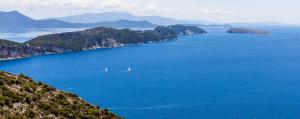
The Ionian Sea is a vibrant home to an incredible diversity of marine mammals, including bottlenose dolphins, common dolphins, striped dolphins, sperm whales, fin whales, and the critically endangered Risso’s dolphin. One of its most fascinating residents, the Cuvier’s beaked whale, holds the record for the deepest dive of any animal on Earth!
Zifios, or Cuvier’s beaked whale is the deepest species on Earth that thrives in areas with distinct underwater features, such as submarine canyons and plains, typically found at depths greater than 1000 meters. It is known for its remarkable diving abilities, reaching depths of nearly 3000 meters and holding its breath for up to 222 minutes!
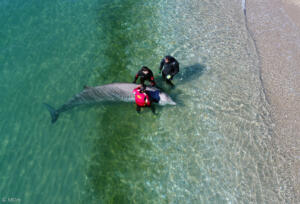
Protected under international agreements, efforts are in place to minimize underwater noise in their habitats. In Greece, their protection area is within the Ionian Archipelagos Important Marine Mammal Area, which also shelters the common dolphin and Mediterranean monk seal. Sadly, the Ionian Sea, especially around Corfu, has experienced a rise in marine mammal strandings and a decline in Cuvier’s whale populations due to habitat pressures.
In partnership with ARION – Cetacean Rescue and Rehabilitation Centre in Greece, IEF is supporting the “Marine Mammal Strandings Responders: Ionian Sea Network Project (MMSR)” on its mission to enhance the National Marine Wildlife Sightings and Strandings Monitoring Programme (National Stranding Network). Participants will learn marine mammal biology, response protocols, and practical techniques like refloating distressed animals, all under the guidance of certified marine mammal biologists and veterinarians. By building this network, we’re not only safeguarding marine life but also cultivating a sense of stewardship among Ionian islanders, ensuring these incredible species and their habitats are protected for generations to come.
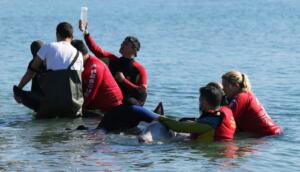
“The response time to a marine mammal stranding event determines life from death itself. The fastest the response, the greatest the chance for survival. In a greater environmental scale, that’s exactly what determines marine conservation effort from marine conservation success.” Elena Akritopoulou PhD, Project manager, marine mammal biologist (ARION – Cetacean Rescue and Rehabilitation Centre).
Corfu establishes its Cetacean Stranding Response Team
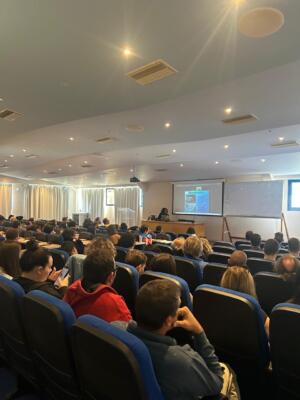
The Ionian Environment Foundation (IEF), in collaboration with the Cetacean Rescue and Rehabilitation Research Center “ARION” and under the auspices of the Municipality of North Corfu, proudly supported the formation and training of the Corfu Cetacean Stranding Response Team (ODEK Corfu), the island’s very first local team dedicated to marine mammal strandings.
The team is made up of 36 trained volunteers from all three of Corfu’s municipalities, now fully prepared to respond to cetacean strandings such as dolphins and whales along the island’s coastline.
The workshop had remarkable participation and support from local residents, regional authorities, and key organizations, including:
- Preveza Forest Directorate
- Veterinarians of Corfu
- Civil Protection of the Municipality of North Corfu
- Corfu Sailing Club
- Corfu Environmental Protection Association
- North Corfu Special Missions Rescue Team
- Local diving centers
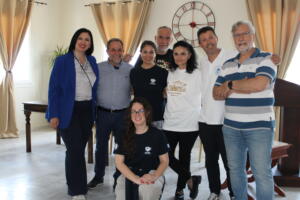
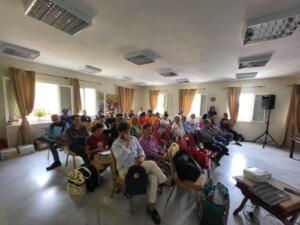
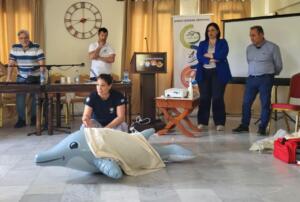
It was an incredible event, both informative and inspiring. The presentations delivered reflected a deep passion and unwavering commitment to the protection of our marine life, including mammals such as dolphins and turtles. It was truly an honour to learn from such experts and to gain valuable insight into the work being done to safeguard our ecosystems -a vital initiative, which I’m proud to be a part of and ready to assist in responding and contributing where needed. An extended thank you to you Dr. Simon Karythis, IEF, for the invite, as well as the two main speakers, Dr. Elena Akritopoulou and Dr. Anastasia Komninou. Your expertise and collaboration—alongside the support of the North Corfu Council are instrumental in strengthening the network of local responders and fostering a more connected and resilient community.
Gayle Dennett, Bella Mare Hotel Manager & Green Agenda co-ordinator, Corfu
Zakynthos establishes its Cetacean Stranding Response Team
Zakynthos now joins the Ionian network of trained response teams, with 12 dedicated local volunteers prepared to respond to stranding or entanglement events involving dolphins, whales, and other cetaceans. The creation of this team represents a crucial step forward, as Zakynthos is one of the few regions in Greece with historically limited official stranding data and response infrastructure in such events.
The training program was carried out with the support of the local community, the Ionian Islands Regional Government, the
Deputy Regional Unit of Zakynthos, and the Municipality of Zakynthos, alongside several key institutions and stakeholders. Notable contributions came from the:
- Management Unit of Zakynthos and Ainos National Parks and Protected Areas of the Ionian islands / Natural Environment & Climate Change Agency (NECCA)
- Department of Environment and Veterinary Services of the Municipality of Zakynthos
- Port Authority of Zakynthos
- Local diving centers
- ARCHELON – The Sea Turtle Protection Society of Greece
- The Hellenic Centre for Marine Research (HCMR) – Hydrobiological Station of Rhodes
- Academic staff and students from the Ionian University
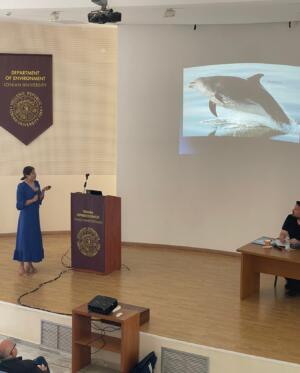
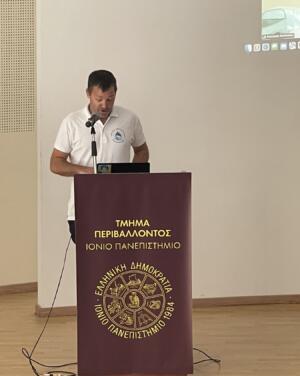
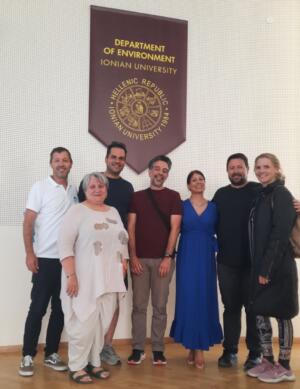
The initiative was under the auspice of the Department of Environment of the Ionian University, as part of the broader ARION/IEF Marine Mammal Stranding Responders (MMSR) program.
Lefkada establishes its Cetacean Stranding Response Team
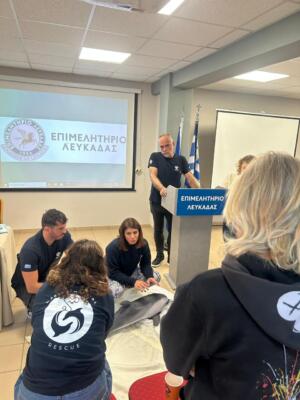
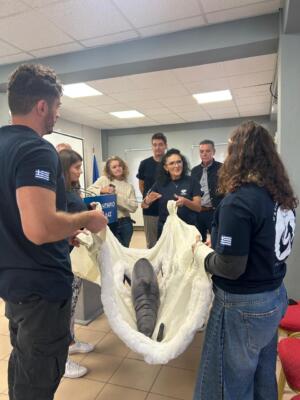
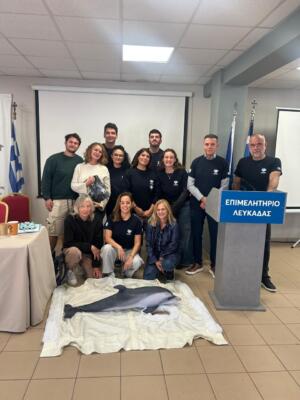
Lefkada enhances its preparedness to respond to marine mammal strandings and entanglement incidents with the establishment of a local Cetacean Stranding Response Team. The team is composed of representatives from a wide range of local authorities, scientific institutions, and volunteer groups, ensuring a coordinated and multidisciplinary response.
The training sessions were hosted at the premises of the Lefkada Chamber of Commerce and were conducted under its auspices, highlighting the strong support of the local community and institutional stakeholders. By bringing together public authorities, scientific expertise, and volunteer networks, the initiative marks an important step forward in building a coordinated and effective response framework for marine mammal conservation in the region.
Kefalonia establishes its Cetacean Stranding Response Team
Kefalonia strengthens its readiness to respond to cetacean strandings and entanglement incidents through the establishment of a local Cetacean Stranding Response Team. The training was carried out at the facilities of the Department of Food Science and Technology of the Ionian University and took place under the auspices of the University.
The Kefalonia Cetacean Stranding Response Team is composed of:
-
Members of the Hellenic Fire Service
-
Members of the Veterinary Services
-
Officers of the Port Authorities
-
Representatives of Civil Protection
-
Representatives of OFYPEKA (Natural Environment and Climate Change Agency)
-
Members of the 1st Kefalonia Scout Group / Scouts’ Wildlife Team
-
Representatives of ANIMA – Wildlife Care Association
-
Members of KOSAMARE NGO
-
Members of the NGO Archipelagos – Environment and Development
-
Private veterinarians
-
Divers
-
Fishers
-
University students
The MMSR training seminar also received active support from the Municipality of Sami, highlighting the strong collaboration between academic institutions, public authorities, NGOs, and local stakeholders. Through this initiative, Kefalonia joins the Ionian network of trained cetacean stranding responders, contributing to improved regional coordination and the effective protection of marine mammals.
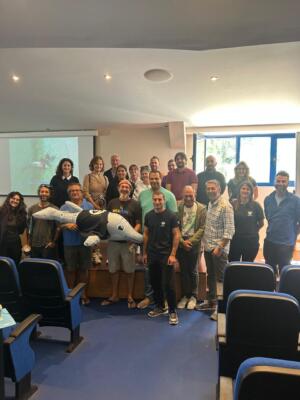
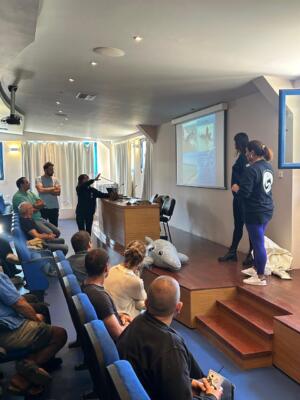
Across all workshops, the volunteers were trained by leading scientists, including the President of the Scientific Committee of the National Network of the Ministry of Environment and Energy for Managing and Monitoring Marine Wildlife Species Strandings, Prof. Anastasia Komnenou (DVM, PhD, President of ARION, Dr. Aimilia Drougas – Marine biologist, geologist-oceanographer, Ministry of Environment and Energy, Professor of Exotic and Wildlife Surgery-Medicine, Department of Veterinary Medicine), the Vice-Chairman of the Scientific Committee of the National Network of the Ministry of Environment and Energy for Managing and Monitoring Marine Wildlife Species Strandings, Dr. George Gkafas, (Associate Professor of Molecular Biology of Marine Mammal and Fish Conservation, Department of Agriculture, Ichthyology and Aquatic Environment (DIAE), University of Thessaly), Marine Biologist, Elena Akritopoulou (Scientific member of “ARION”, BSc, MSc, PhD(c) Marine Mammal Monitoring Unit – Department of Agriculture, Fisheries & Aquatic Environment – University of Thessaly) and Dr. Andreas Kyriazis Veterinarian DVM, member of the ARION Veterinarians’ Network, Evridiki Kontementiotou, PhD(c), Cetaceans Rescue and Treatment, Veterinarian – ‘ARION’.
The event represents a meaningful step toward strengthening local capacity to care for marine wildlife and respond to emergencies in real time. The Ionian Environment Foundation is proud to continue supporting long-term, locally driven environmental solutions for the Ionian Sea.
We are deeply grateful to The A. G. Leventis Foundation for their generous support in making this first phase of this project a reality.