
Grants
Habitat & Biodiversity Protection
Otters of Lefkada: Protecting a Hidden Treasure
€10,000 awarded
The Challenge
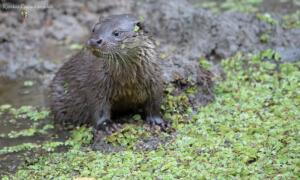
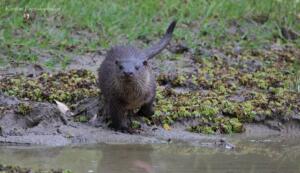
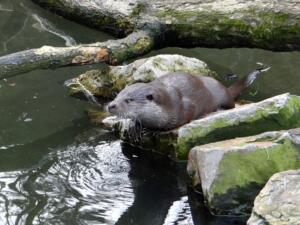
The Eurasian Otter (Lutra lutra) is a semi-aquatic mammal, a flagship species for healthy wetlands and a key indicator of clean water and ecological balance. In Greece, otters are fully protected under EU and national legislation and are listed as Endangered in the Red Data Book of the Threatened Animals of Greece (2009 assessment). Island populations are considered particularly vulnerable and rare.
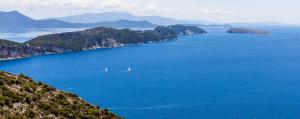
Lefkada is one of only three Greek islands—along with Corfu in the Ionian Sea and Euboea in the Aegean Sea —where otters still occur in the Mediterranean, making its wetlands critically important for the species.
However sightings remain sporadic, and recent roadkill incidents indicate that the otter’s presence on the island is fragile. Threats such as habitat loss, wetland pollution, disturbance linked to tourism, and road mortality place both the species and the ecosystems they depend on at serious risk. Without coordinated monitoring, appropriate habitat management by nature protection authorities, and public engagement, otters on Lefkada risk disappearing locally—jeopardising both biodiversity and wetland health.
The Project
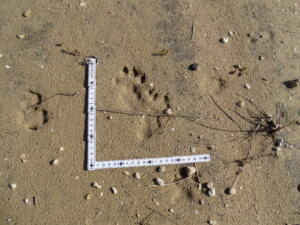
Over a 12-month period, this project will deliver the first structured assessment of otters on Lefkada. Seasonal field surveys, habitat mapping, and threat analysis will identify key habitats and pressures across Lefkada’s wetlands and coastal areas using camera traps, drone surveys with thermal cameras, recording of field signs and direct observations.
The project will seek to work with nature protection authorities, including the Natural Environment and Climate Change Agency (NECCA), and with the Environmental Education Centre of Lefkada, and local organisations and nature associations, to promote awareness and conservation actions that reduce key threats such as road mortality, including the use of warning signage in high-risk areas.
A public “Otter Day” in Lefkada will inform and involve local communities, raise public awareness about otters and wetlands, encourage active participation, and foster local stewardship. The project will culminate in the preparation of a Draft Ionian Otter Action Plan (2026–2030), outlining priorities for population monitoring, habitat management, and coordinated wetland conservation on Lefkada and Corfu.
Project Update
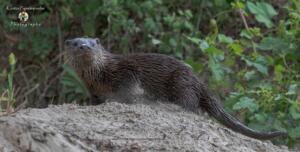
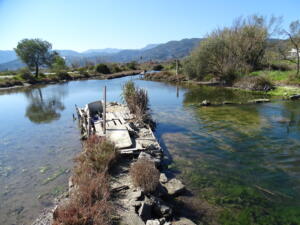
New findings by RWILD IN GR confirm that the Eurasian otter in Lefkada uses not only lagoons, wetlands, and stream mouths, but also the sea. This is especially important for otter conservation on islands, as it shows that even otters living along the coast still depend on freshwater.
Freshwater helps otters remove salt from their fur and maintain its insulating quality. This makes small springs, wetlands, reedbeds, and stream mouths especially important within Lefkada’s landscape.
During recent fieldwork in northeastern Lefkada and along the opposite coast of Aitoloakarnania, RWILD IN GR recorded otter presence at six new locations — three on Lefkada and three on the mainland coast — adding to previous records from earlier surveys. These findings strengthen the view that otters use the wider area as a connected habitat network, moving between lagoons, coastal wetlands, shorelines, and the sea.
Why It Matters
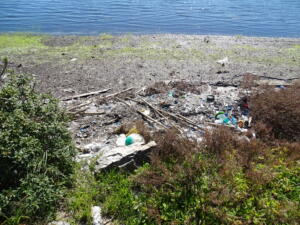
These habitats are facing growing pressure. Three recent deaths from vehicle collisions have already been recorded, while new roads, land clearance, pollution, rubbish dumping, and habitat fragmentation are further degrading the ecosystems otters depend on.
The Lefkada project also reflects a wider national concern. According to Greece’s latest national reporting under the EU Habitats Directive, the otter’s current conservation status remains favourable in terms of range, population, and habitat. However, its future prospects are now assessed as Unfavourable–Inadequate, due to habitat loss, wetland pressures, water scarcity, and climate change.
Next Steps
The next phase of the project includes more fieldwork, mapping freshwater sources, and awareness activities for local communities and schools of Lefakada. Protecting otters means protecting water, wetlands, and the fragile connections between land and sea.