

Grants
Civil Society and Capacity-Building
Wild Edible Greens in Kefalonia & Ithaca
5,600 awarded
The Challenge
Τhe decline of wild edible greens across Kefalonia and Ithaca, reflects a deeper challenge: declining soil health, biodiversity loss, and the fading of traditional ecological knowledge.
Intensive farming practices and herbicide use have altered landscapes that once sustained both nature and people. As these plants vanish, so does a living connection to the land—rooted in seasonality, sustainability, and local food culture.
The Project
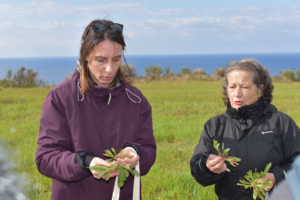
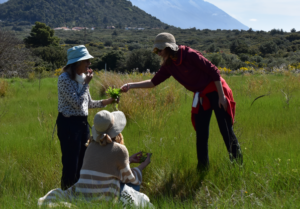
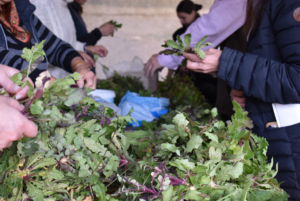
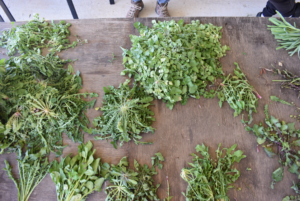
This project invites communities to rediscover the edible richness growing around them. Through three full-day experiential workshops in Argostoli, Lixouri, and Ithaca, participants learn to identify wild edible greens, harvest them responsibly, and transform them into food through hands-on cooking sessions. Scientific knowledge is combined with practical fieldwork and culinary practice, turning education into a shared, sensory experience.
A Greek–English field guide will be produced and distributed featuring more than 30 native edible plant species. Outreach activities in schools and collaborations with local cultural associations help extend the project’s impact beyond the workshops, fostering community dialogue and long-term stewardship.
Outcomes
Participants gain practical skills, confidence, and a renewed relationship with local ecosystems. Schools and public libraries are enriched with accessible educational resources, while the project’s findings will be shared at a national conference, contributing to broader scientific and cultural exchange.
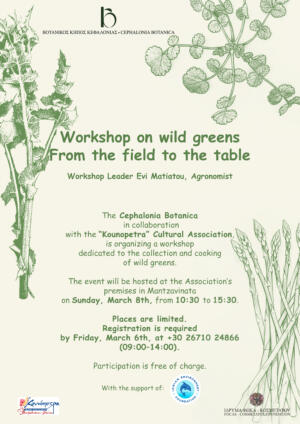
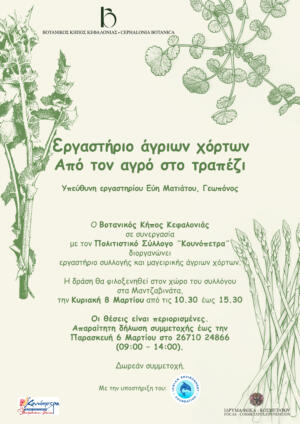
Cephalonia Botanica in collaboration with “Kounopetra” Cultutal Association“, is organizing the first workshop dedicated to the collection and cooking of wild greens, led by agronomist Evi Matiatou, in Mantzavinata – Lixouri on Sunday, March 8th.
About Our Partner
The project is implemented by Cephalonia Botanica, an organisation dedicated to environmental education, biodiversity protection, and the preservation of local ecological knowledge. Through field-based learning and community engagement, Cephalonia Botanica promotes sustainable relationships between people, food, and the natural environment.
Photo Credits: Cephalonia Botanica