
Erimitis at the heart of the Towards Resilient Destinations conference
Erimitis as a defining example for the future of tourism
The recent live coverage of the Towards Resilient Destinations conference on Greek national television highlighted a growing shift in how tourism is being understood — both in Greece and across the Mediterranean.
Speaking to ERT, Dimitri Vayanos, Professor of Finance at the London School of Economics (LSE) and member of the Pissarides Commission on Greece’s growth strategy, emphasised the need for a new tourism model that enables local productivity, defined not by visitor numbers, but by the protection of the historical and ecological identity of places. Referring to the Erimitis peninsula in Corfu, he described development at the expense of natural capital as “killing the goose that lays the golden eggs.”
See the full interview here:
Over the course of the conference, Erimitis quickly became a central reference point — a real-world example of the choices facing many destinations today.
This perspective was echoed throughout the discussions.
Matthew Lodge, UK Ambassador to Greece, noted: “The UK and Greek governments are both committed to economic growth that goes hand in hand with efforts to safeguard the environment. It is not an either-or choice. We must work together and learn from each other.”
Achim Steiner, former head of the United Nations Development & Environment Programme with particular reference to Erimitis, added: “The most successful tourist destinations are frequently the most fragile. Tourist systems have been designed for growth, not resilience… value must be anchored locally… development should be driven through conservation and value per visitor, not the number of visitors.”
Ian Goldin, Professor of Globalisation and Development at the University of Oxford, Founding Director of the Oxford Martin School, and former Vice President of the World Bank, argued that the potential development of Erimitis reflects what he described as…
“a case of not only financial collapse but also of moral collapse.”
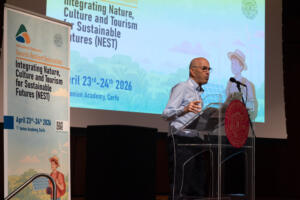
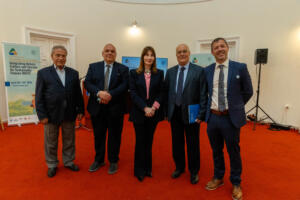
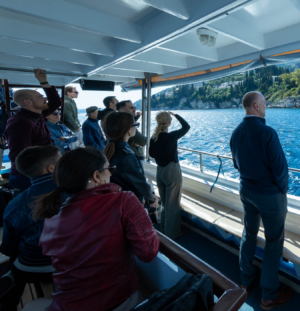
One of the most powerful moments of the conference was stepping outside the room and into the landscape itself — a visit by boat to Erimitis, where many of these questions became immediate and tangible.
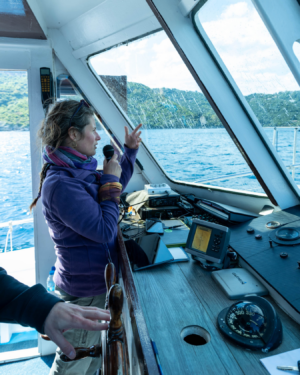
Elena Papadopoulou, Biologist & Scientific Advisor of Erimitis Plus during boat trip to Erimitis
Together, these contributions point to a broader shift: tourism can no longer be understood simply as a driver of growth, but must be carefully managed to sustain the environmental and cultural systems on which it depends. Erimitis stands as a clear reminder of the choices that now lie ahead.
A sincere thank you to all our speakers, partners and participants for the generosity and depth they brought to the discussion. Special thanks to the Ionian University for the collaboration, to Aegean Airlines our travel sponsor, and to the A. G. Leventis Foundation for their generous support.