
Grants
Habitat & Biodiversity Protection
Ionian Dolphin Project
€5,000 awarded
CHALLENGE
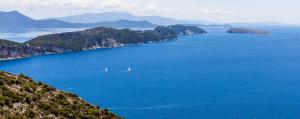
The eastern Ionian Sea supports important populations of dolphins and Mediterranean monk seals, but these animals face increasing pressure from human activity. Understanding their populations, behaviour and movements requires long-term monitoring, particularly for rare and vulnerable species whose numbers and distribution can change over time.
The Ionian Environment Foundation (IEF) continued supporting the Ionian Dolphin Project (IDP) throughout 2025. This project, a long-standing partnership with the Tethys Research Institute, focuses on protecting marine mammals in the Eastern Ionian Sea.
PROJECT
Efforts in three critical study areas, the Inner Ionian Sea Archipelago, Gulf of Ambracia, and waters around Paxos and Antipaxos islands, contribute to a wider conservation vision. Each of these areas, designated as Important Marine Mammal Areas, holds distinct significance for the survival of regional marine life. These conservation actions align with European and international commitments, advancing biodiversity protection and sustainable marine ecosystem management.
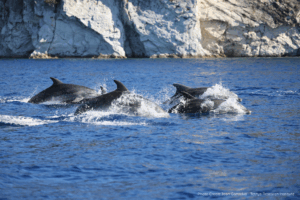
Each year, the team combine boat-based surveys, photo-identification, behavioural observations and acoustic monitoring to track dolphins and monk seals and document their habitats and interactions with human activities. The project also translates this research into conservation action, working with partners and local stakeholders to raise awareness and support the protection of important marine habitats.
OUTCOMES
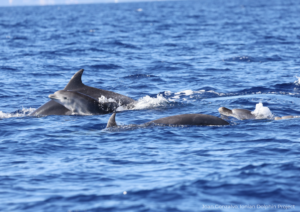
With IEF’s continued support, the Ionian Dolphin Project carried out 27 days of fieldwork over four months in the past year, covering 2,209 km at sea and recording 13 dolphin sightings. Ten individual dolphins were identified, including six recorded for the first time, adding valuable data to the project’s long-term population records.
The team also documented 26 Mediterranean monk seal sightings, with more than 9 hours of behavioural observations and 2,857 images collected for the project’s growing photo-identification database. The team also investigated interactions between monk seals and fish farms, with findings being prepared for scientific publication.
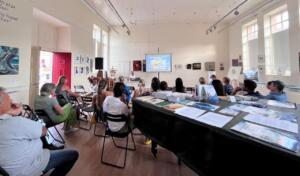
Beyond research, the project worked with iSea to raise awareness of the importance of Formicula and its protection. Information materials were developed for visitors and the nautical sector and distributed to local stakeholders and boats encountered during monitoring surveys.
For more information about the restricted access zone around Formicula islet check here:
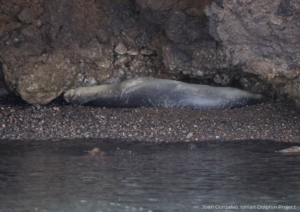
Research on monk seal behaviour and vocalisations also included underwater observations that are helping scientists better understand how the species communicates.
This work is contributing to research published in the Journal of the Acoustical Society of America, documenting Mediterranean monk seal underwater vocalisations for the first time and laying the groundwork for future acoustic monitoring. Read the full research here: Confirmed vocal activity of mediterranean monk seals in the Inner Ionian Sea Archipelago, Greece – PubMed
Help protect marine mammals by following a few simple codes of conduct. The Let’s Be Smart poster offers practical guidance on how we can all help minimise disturbance and protect marine life.